
On September 10, 2001, I was in New York for work — shooting an event for Empire Force Events, whose client that night was Hong Kong Tourism. We were there to photograph the christening of a Circle Line ferry, and the weather had other plans: it poured the entire night. I’d driven up from DC that afternoon, nearly eight hours on the road, with no idea that the assignment I was there to shoot would end up being the last ordinary thing I did for a long time.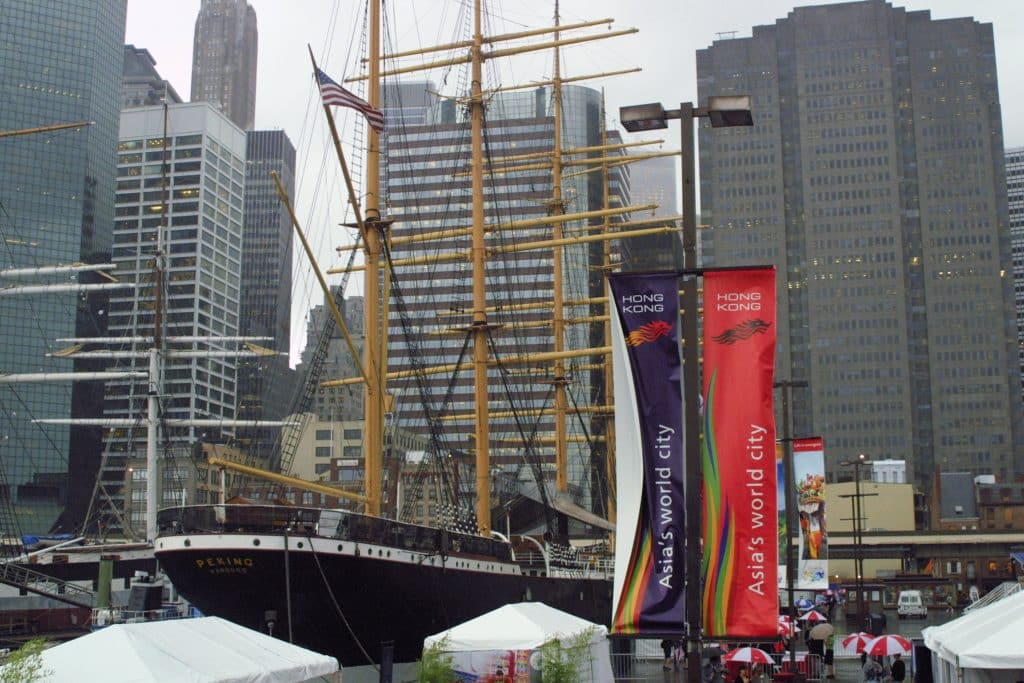
The event itself was full pomp and circumstance.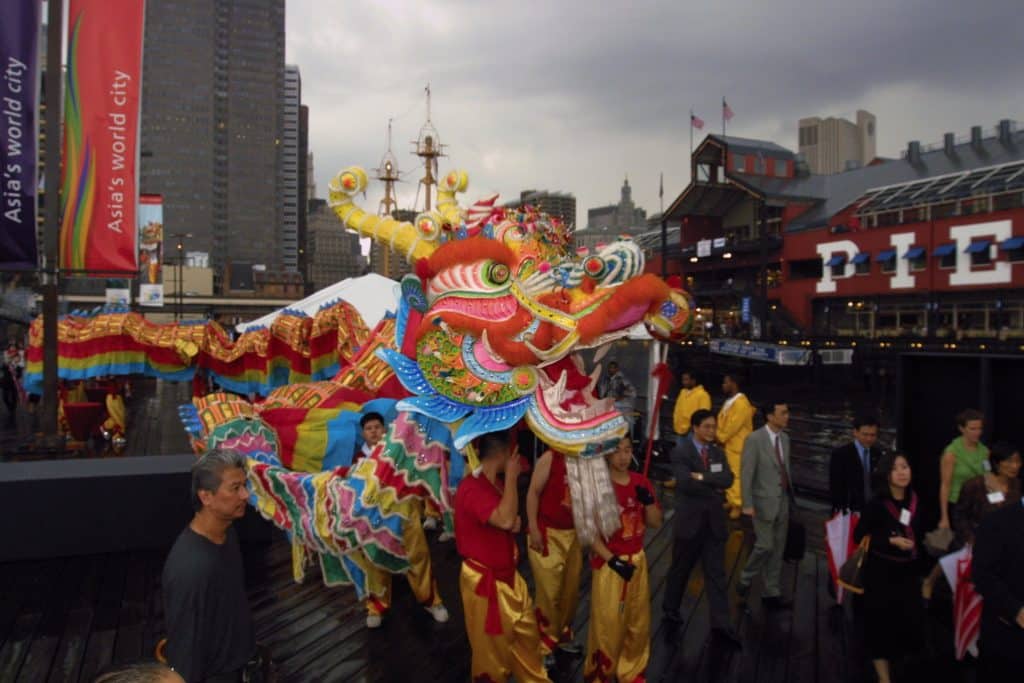 Down at South Street Seaport, with the tall ship Peking and the Brooklyn Bridge as a backdrop, the pier was a sea of red-and-white umbrellas branded with the Hong Kong logo, everyone huddled against the rain.
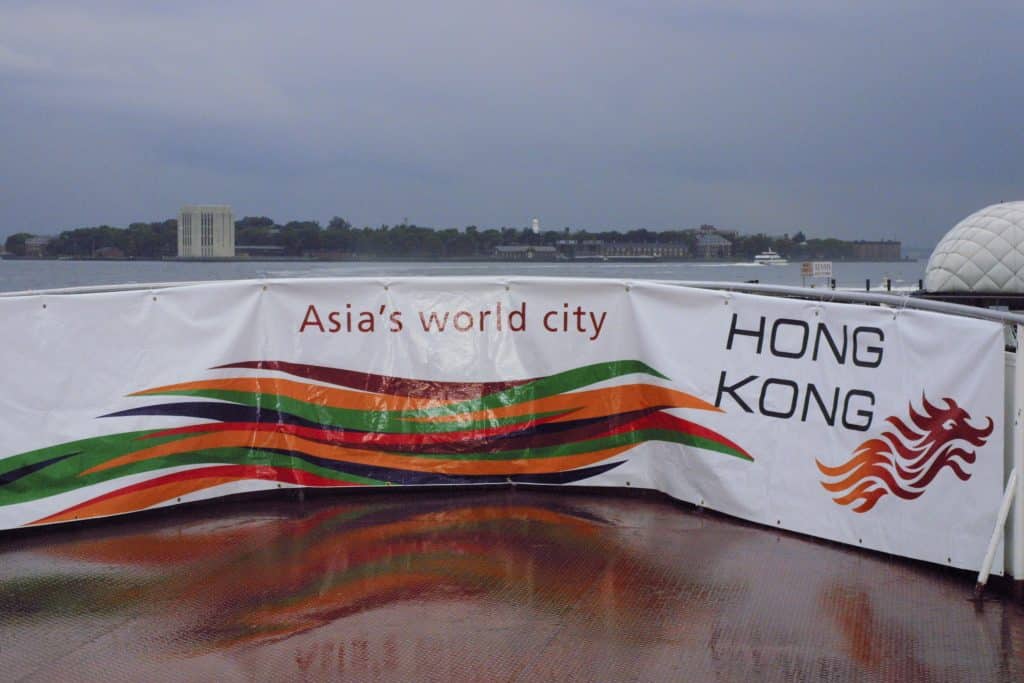 Banners reading “Hong Kong • USA 2001 — Asia’s World City” hung everywhere — a reminder that New York and Hong Kong are sister cities, and this was a real diplomatic showcase, not just a corporate party. A Chinese dragon dance troupe wound its way through the crowd, and a children’s choir in white shirts performed for a TV camera crew capturing the whole thing.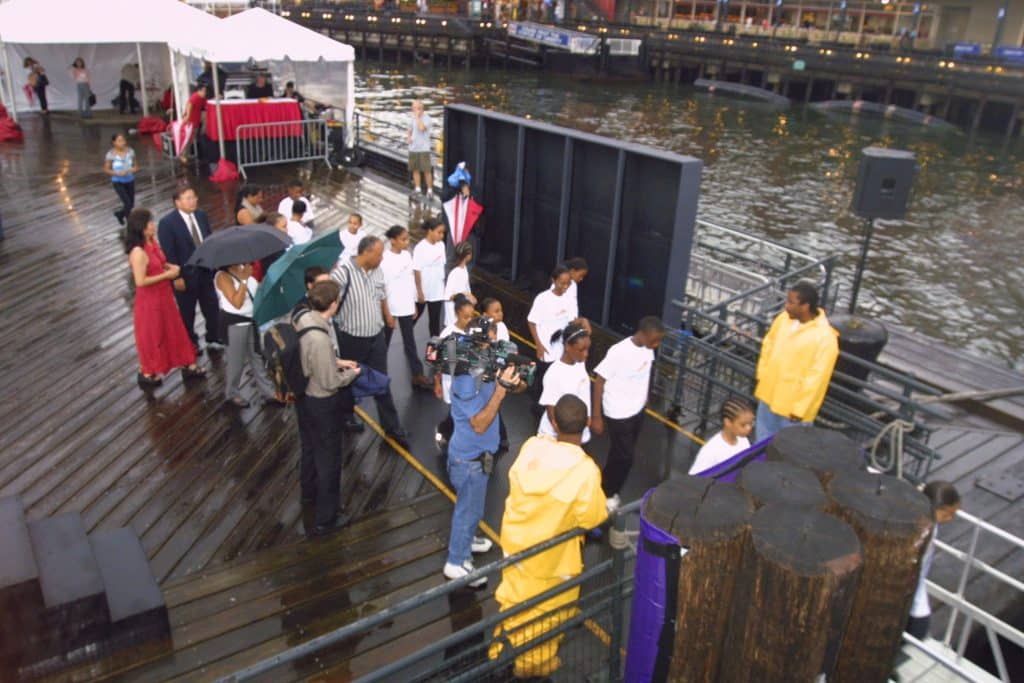
Somehow, right as the Chancellor and his wife boarded for the christening, the rain paused.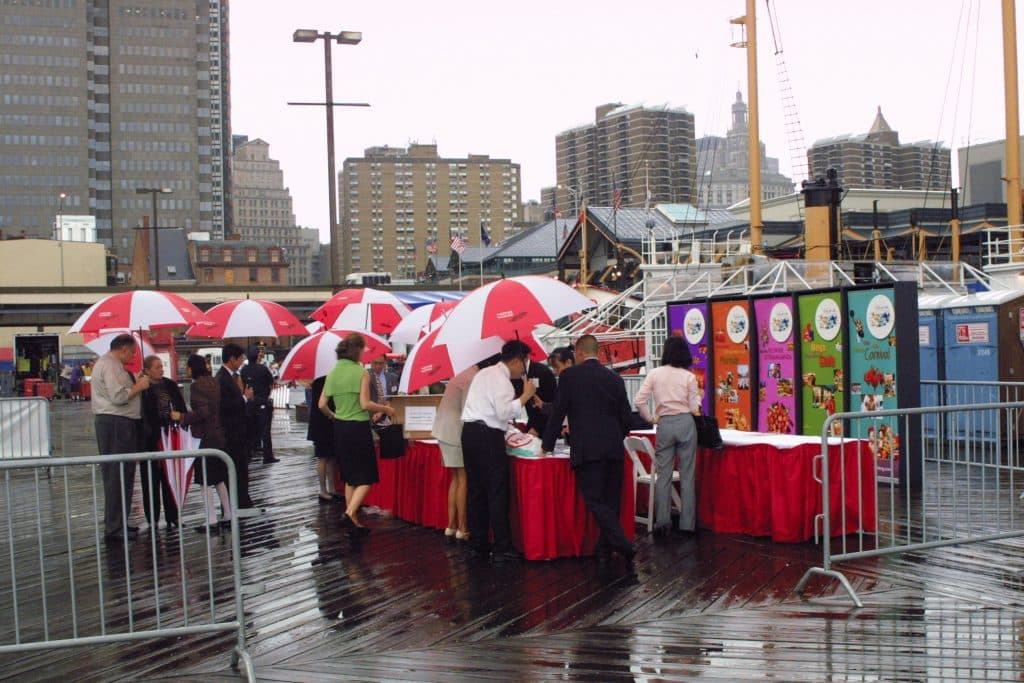 We toasted with champagne at the bow, the Brooklyn Bridge behind us, and set off on a loop around the Statue of Liberty in a rare dry window.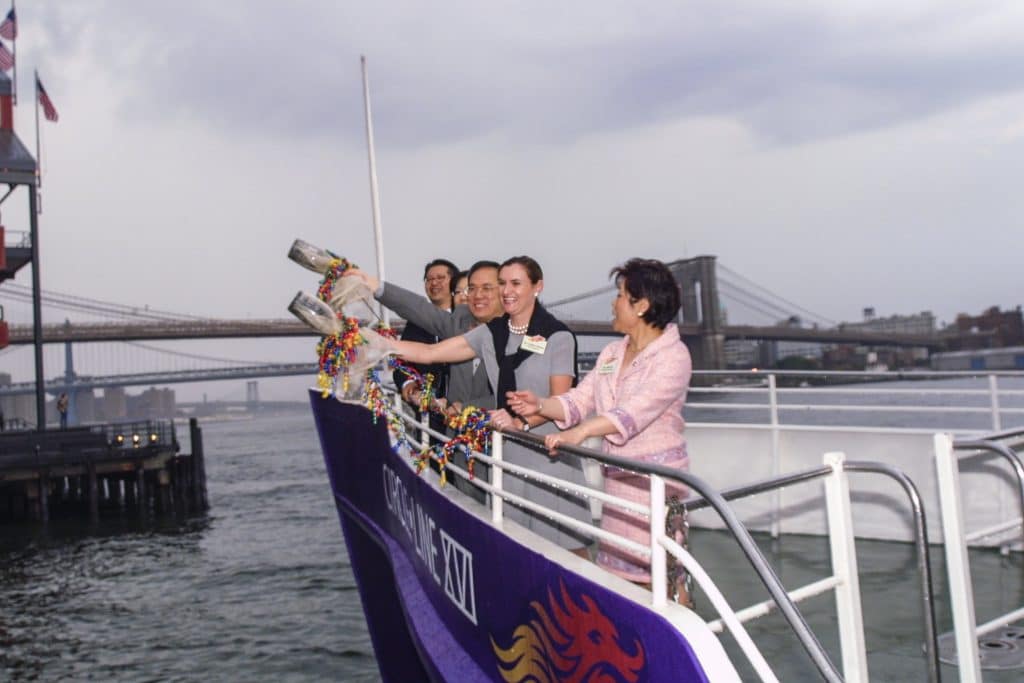
At 6:42 p.m., standing on the outside deck, I glanced back over my shoulder. A small crack had opened in the clouds, and it cast an eerie glow over the World Trade Center. I took a few frames without thinking much of it — just another moment to capture on an assignment full of them — and then we continued back to port. I’ve never published that photo. It’s been copied and reused too many times since to feel like mine anymore. By the time we docked and started breaking down, the rain had returned, as if it had only paused to let that one strange, glowing moment through.
That night, my client — Robert Hulsmeyer of Empire Force Events, who was already a friend and is one of my best friends to this day — and his team wrapped up, and we all went out for a wonderful dinner. None of us had any idea what was coming in roughly nine hours.
I was staying at the Plaza Hotel. I woke up just before 8:30 the next morning and flipped on the Today Show out of habit. Bryant Gumbel and Katie Couric were already breaking in with an emergency announcement: a small plane had hit the World Trade Center.
Outside, it was one of those perfect early-fall days — mid-70s, not a cloud in a deep blue sky. It’s the detail that still gets me all these years later: the weather had no idea what was happening underneath it.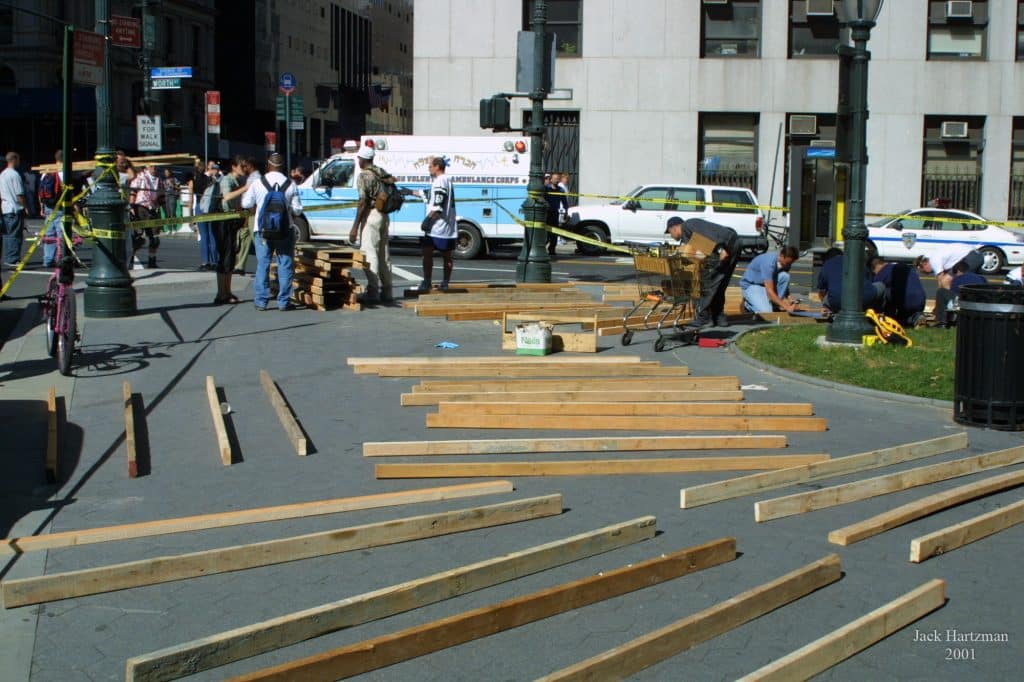 While most of Manhattan was fleeing north, away from downtown, I grabbed my gear and did the opposite — I walked, camera in hand, from 59th Street all the way down to the Empire Force office at 23rd and 6th. The EFE team and I heard one of the towers come down before we ever saw anything — a sound that didn’t feel real — and only after that did we go up to the roof to see for ourselves. Then my now soul mate, Stuart Weiser, and I left the building and walked toward Ground Zero.
The World Trade Center wasn’t just a landmark to me. My uncle Abe worked on the 46th floor when I was in high school, and I spent countless visits up there with him. I even had one unforgettable kiss with SG in a WTC elevator, riding down from the 120th floor to the lobby, back when I was in my mid-20s — neither of us has ever forgotten it. Years later, my career brought me back — I shot events at Windows on the World, the restaurant at the top of the North Tower. It had been part of my life for a long time before it became part of this.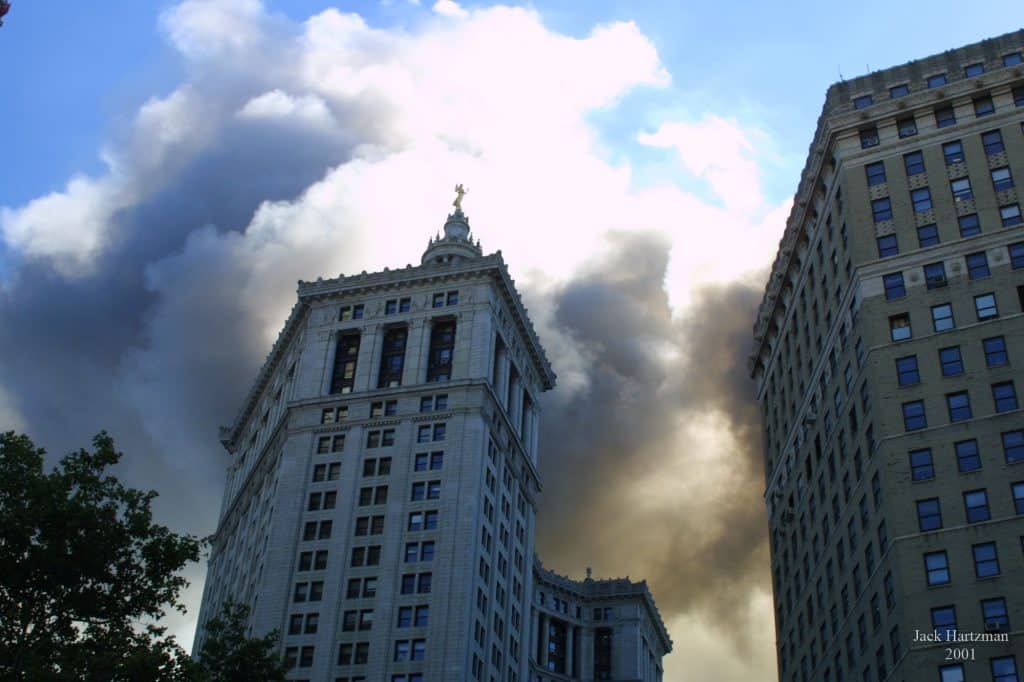
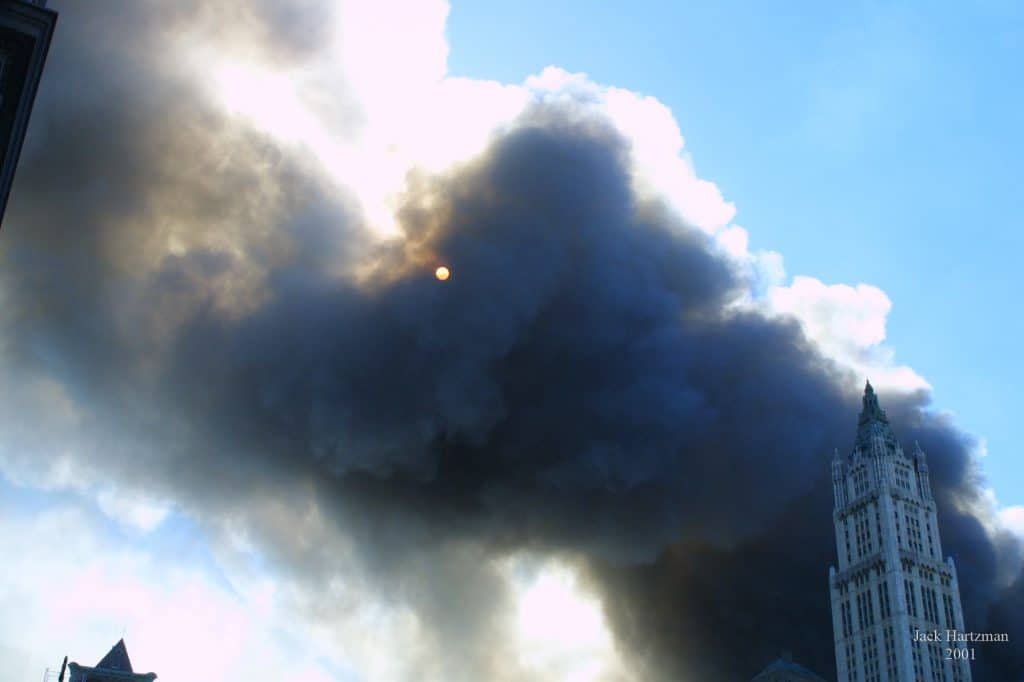
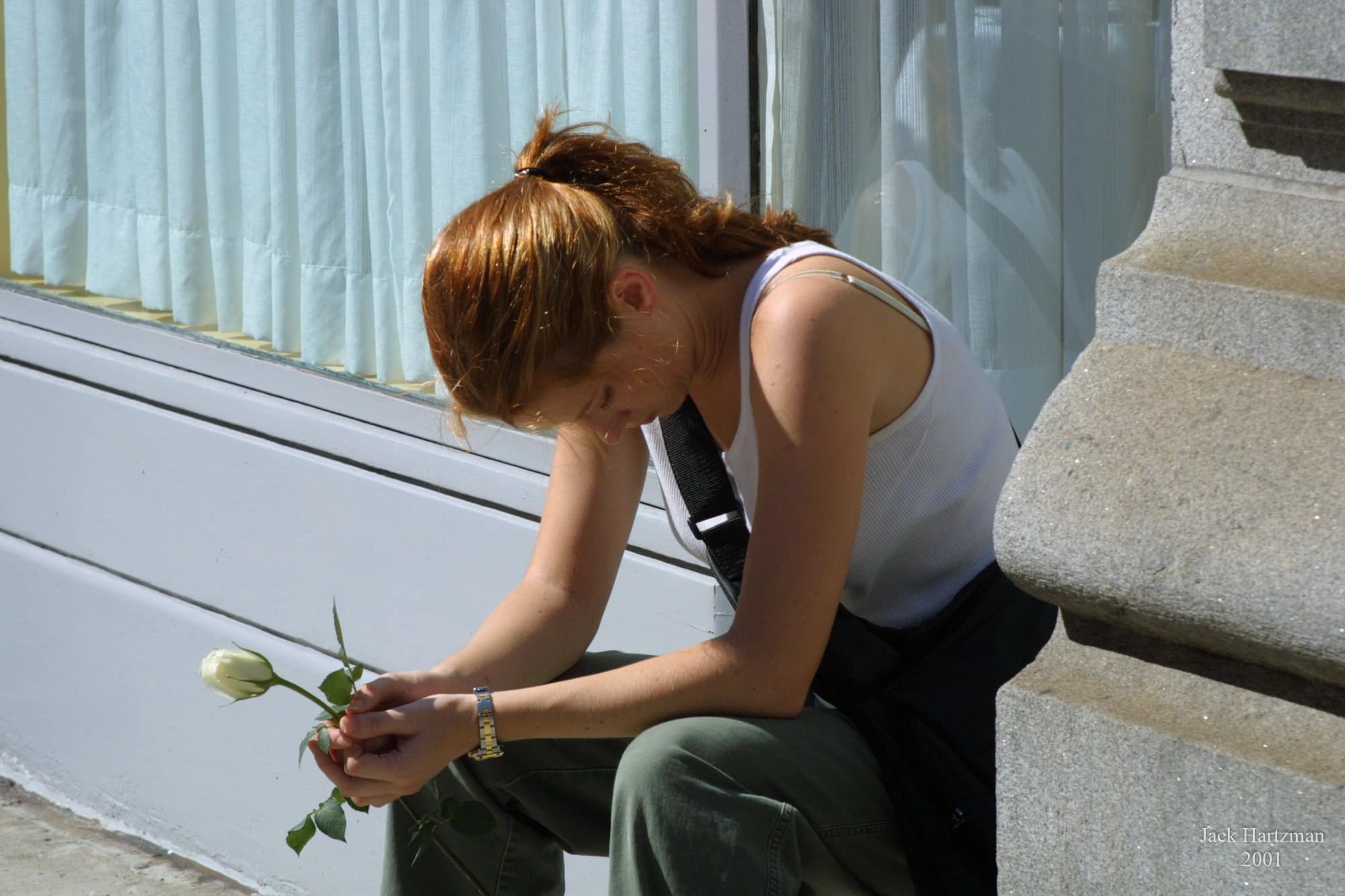
Walking downtown with Stu, the whole thing felt unreal — like our own version of Vietnam footage, or a Bruckheimer movie, like someone was about to yell “cut.” By the time we’d made our way down through SoHo, past Spring Street and toward Foley Square, the smoke was still pouring into the sky from whichever tower had gone down last. I remember it just kept coming — a massive, churning column rising up over the rooftops and rolling through the canyon of the streets, turning the sky the color of ash against that same beautiful blue. Life on the sidewalks had split in two: some people stood frozen, others kept moving like they had somewhere they still needed to be. I photographed a woman sitting alone against a storefront gate, knees pulled in, staring at something none of the rest of us could see. Not far from her, a firefighter crossed the intersection dragging a heavy black bag, his turnout gear catching the light. Nobody around them said much of anything.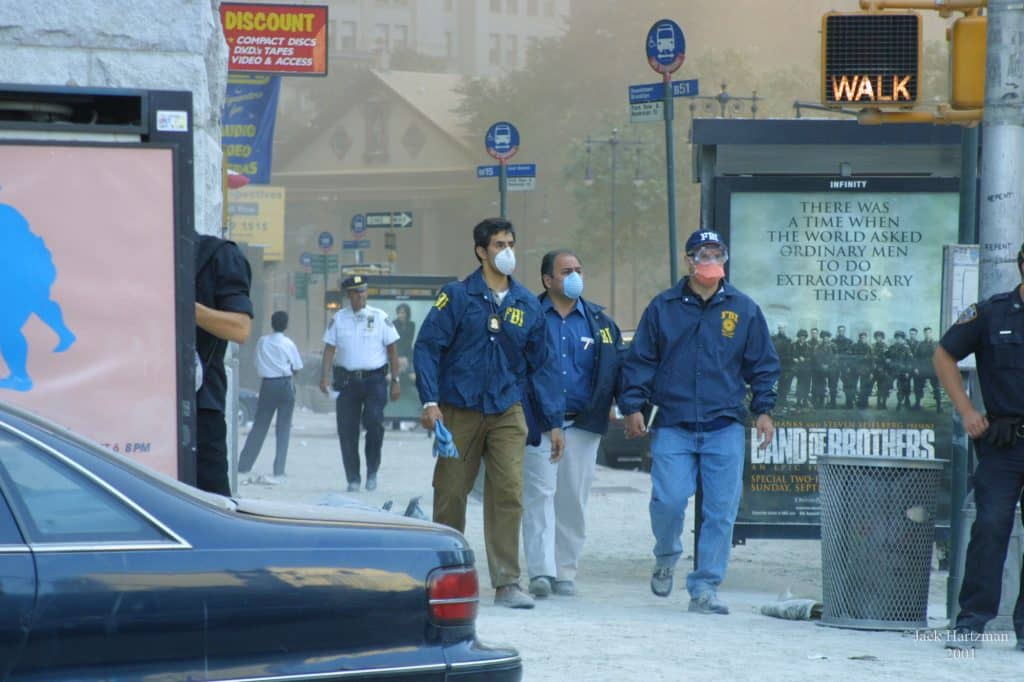 As security tightened, our path kept getting pushed back — by the time we reached lower Manhattan, we were still about ten blocks from the site itself. We never got closer than that. What I photographed instead, block by block, is its own kind of record: firefighters walking away from the site, soot to the bone, still carrying their gear because there was nowhere yet to put it down. Patrol cars and trucks caked gray with dust, as if they’d been pulled out of a quarry instead of off a city street. A
 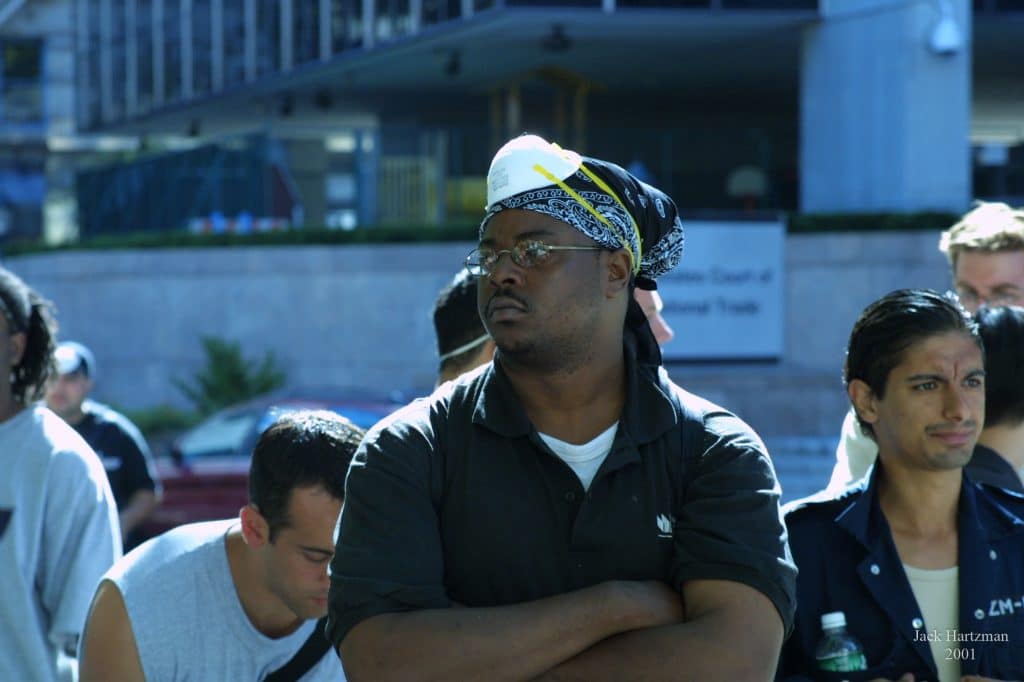 woman sitting quietly near an old restaurant in Tribeca, holding a single white rose. I wish I knew her name.
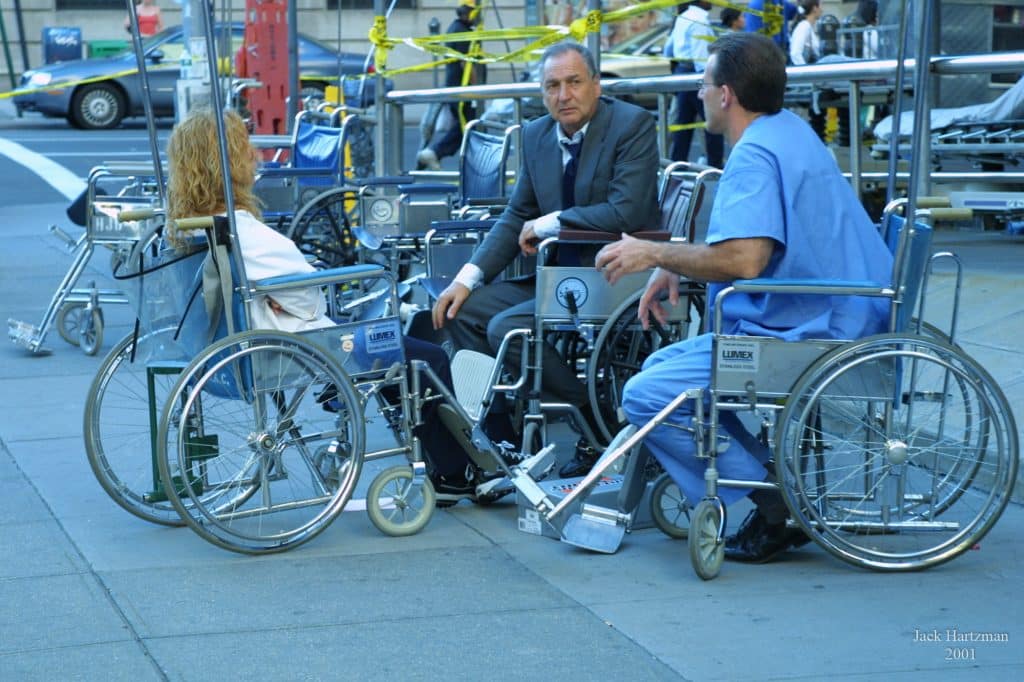 And then, a few blocks on, something I’ve thought about many times since: volunteers — among them the Guardian Angels, in their red berets and jackets — showed up with trucks full of plywood and lumber, building stretchers by hand right there on the pavement.
 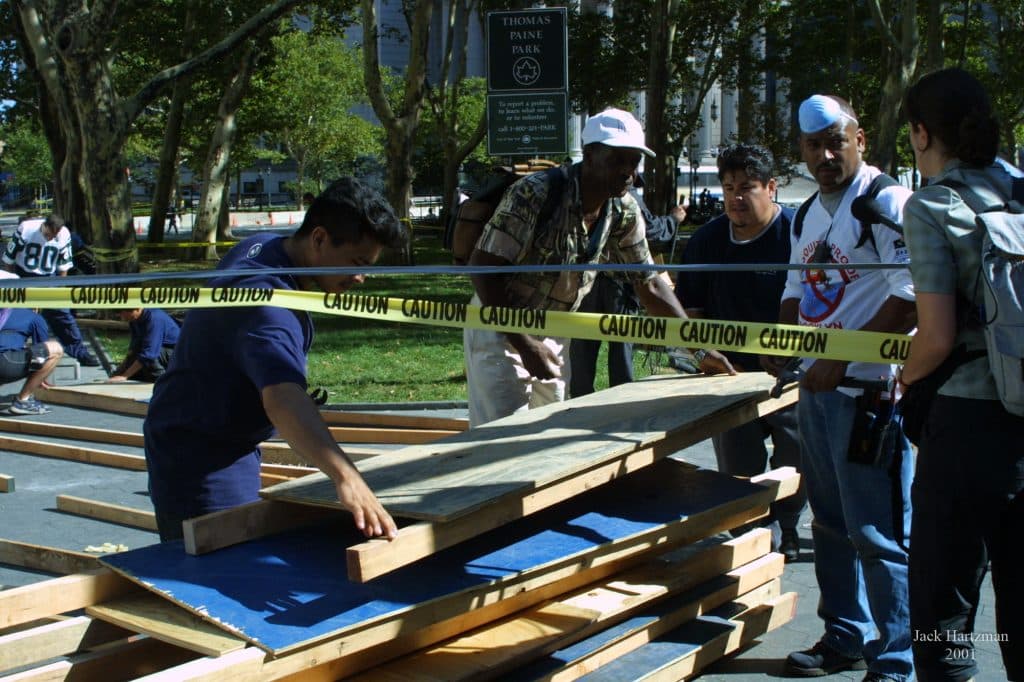 Nearby, a line of empty wheelchairs and gurneys stood ready, and people held up scraps of paper with their blood type scrawled on them in marker — O negative, O positive — so they could be found and matched quickly if they were needed. Everyone there was ready to help carry the wounded out.
 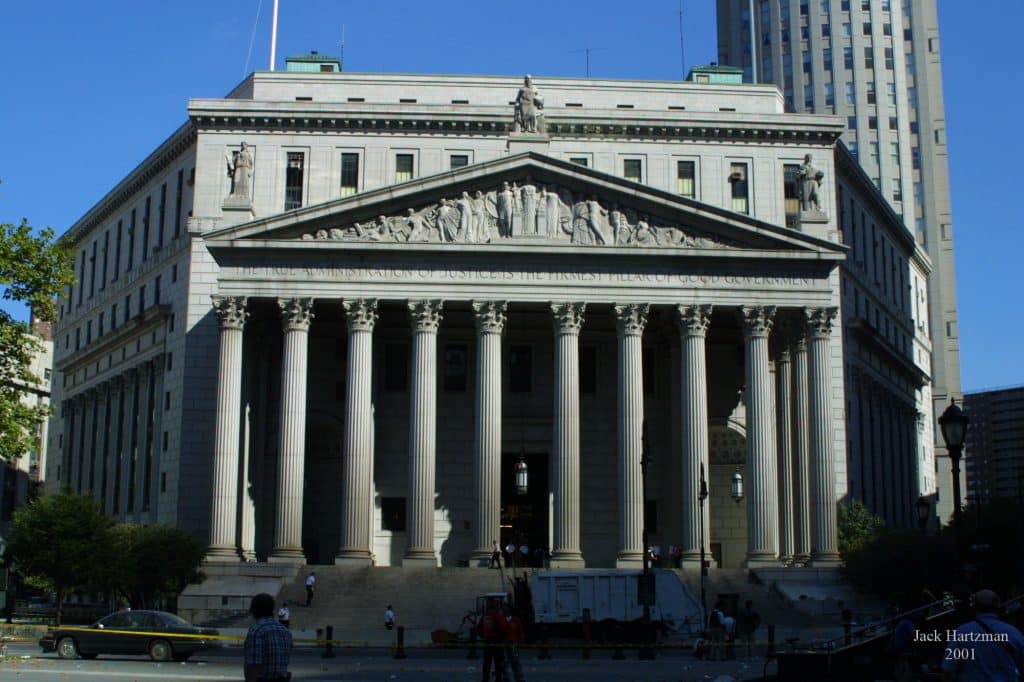 Standing near that spot, I remember trying my phone and getting nothing — no cell service at all. There was no way to call anyone, no way to check on anyone.
And then, somehow, my phone rang. It was my wife at the time, Penny, and our kids, calling to make sure I was okay. To this day I have no idea how that call got through when nothing else could. It’s still one of the strangest, most grounding moments of that whole day — a single connection getting through the static, right when I needed it most.
Sadly, in the end, none of the stretchers were needed.
By then Stu and I were exhausted, and hungry in that dazed way where you almost forget your body needs anything until it insists. We walked all the way to Katz’s Deli on the Lower East Side, chasing the most ordinary comfort we could think of. It was closed. Even Katz’s — open through blackouts, blizzards, everything — had shut its doors that day.
As the day wore on, Stu and I met up with Samara — a coworker of his who I also happened to know personally — and the three of us stayed together for a while longer. Eventually Stu headed off on his own, and Sam and I made our way back up to the Plaza. The hotel bar was packed — every seat taken, people standing three deep — but it was completely silent. No music, no conversation. Just a room full of strangers, all staring up at the same television, waiting for whatever came next.
After a while, the hotel’s General Manager walked in and asked for everyone’s attention. “How many of you belong somewhere else this evening?” he asked. A tired, knowing kind of laugh went around the room. Then he explained: hundreds of people who were supposed to check in that night couldn’t get anywhere near Manhattan, and hundreds of us who were already here couldn’t get out. So if you’d stayed at the Plaza the night before, he said, tonight was on the house. The hotel ended up comping hundreds of room nights for people who simply had nowhere else to go.
I ended up landlocked in Manhattan for 72 hours.
That’s where the pictures from that day end for me. The story isn’t finished — it picks back up on September 23rd at Yankee Stadium, and again on October 21st in Washington, DC — but that’s Part 2, coming soon. For now, this is where September 11th, 2001 stops for me: ten blocks back, one call getting through when nothing else could, watching people get ready to help, watching that help go unused, a hotel giving away rooms to strangers because it was the only thing that made sense to do — and three days landlocked on an island that, for a little while, took care of whoever it had.
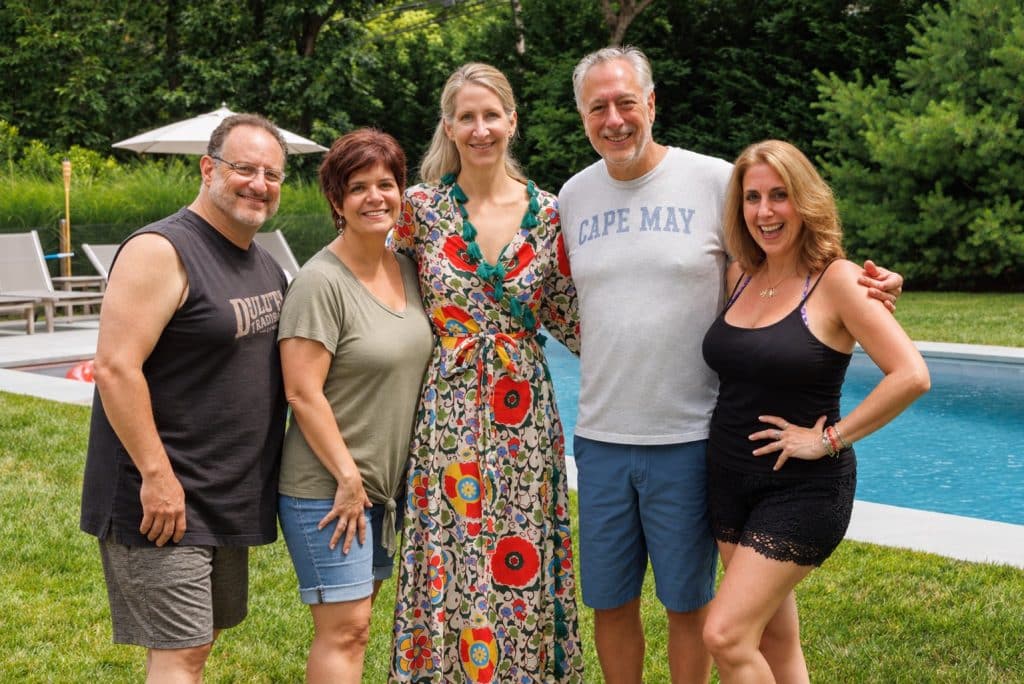 Robert’s partner in Empire Force Events, Jaclyn Bernstein, wasn’t with us that night — she was in DC, speaking at an ISES (now ILEA) industry meeting at 7 a.m., then racing to catch an 8:30 flight up to join everyone, along with my partner, Monica Vidal. That flight left DCA and never made it — it landed in BWI instead, and neither of them made it to New York that day. Twenty-five years later, Rob, Jaclyn, Monica, and I are still the best of friends, and we still work together.
Part 2: To be continued…